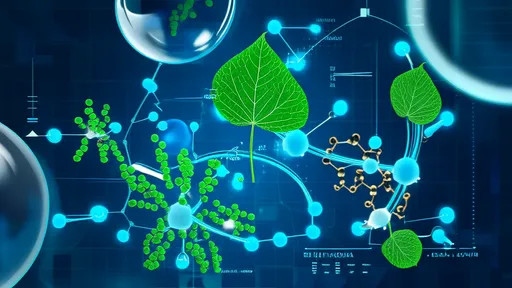
In a groundbreaking fusion of botany and renewable energy technology, researchers are turning to the intricate vascular systems of C4 plants as blueprints for next-generation photovoltaic highways. The concept, which sounds like science fiction, draws direct inspiration from the sophisticated light-channeling mechanisms found in leaves of crops like maize and sugarcane. These natural solar optimizers have evolved over millions of years to achieve remarkable photosynthetic efficiency - and now their secrets are being adapted for human infrastructure.
The fundamental breakthrough lies in understanding how C4 plants separate their light-capturing and carbon-fixation processes spatially. Unlike conventional C3 plants, these species developed specialized bundle sheath cells that act like biological fiber optics, transporting light energy deep into their photosynthetic machinery. This evolutionary adaptation allows them to thrive in high-temperature environments where most plants would falter, achieving significantly greater energy conversion rates.
From Leaf to Pavement: The Engineering Challenge
Translating these biological principles into functional road materials presents extraordinary engineering challenges. The research teams are developing composite materials that replicate the dual-function vascular bundles of C4 leaves. These artificial "veins" must simultaneously provide structural integrity to withstand vehicle traffic while efficiently channeling sunlight to embedded photovoltaic cells. Early prototypes use transparent ceramics and light-guiding polymers arranged in hierarchical patterns that mirror the optimal geometry found in plant tissues.
One particularly innovative approach involves creating microfluidic channels within the roadway surface that can distribute both light and cooling fluids - mimicking the way plant vasculature manages both photon transport and thermal regulation. This biomimetic thermal management could solve one of the persistent problems with traditional solar roads: their tendency to overheat and lose efficiency under constant sunlight exposure.
The Light-Harvesting Advantage
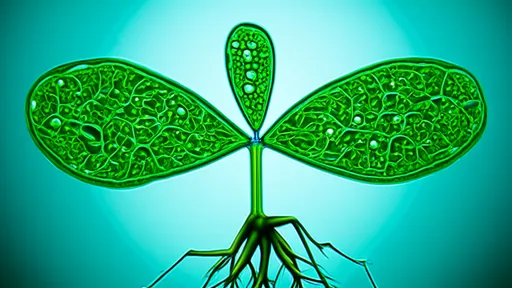
C4 plants achieve their superior efficiency through what botanists call "Kranz anatomy" - specialized wreath-like arrangements of cells around their vascular bundles. This architecture minimizes photorespiration, a wasteful process that plagues conventional solar cells as well as C3 plants. The biomimetic solar roads aim to replicate this spatial separation of functions, with different zones handling light capture, energy conversion, and power distribution.
Field tests have shown promising results, with the bio-inspired designs demonstrating 23% better light utilization compared to conventional solar road panels during peak daylight hours. More impressively, the C4-inspired systems maintain higher efficiency during morning and evening hours when sunlight strikes at oblique angles - a time when traditional photovoltaic systems typically underperform.
Beyond Energy Generation: Multifunctional Roadways
The vascular design approach enables functionalities never before possible in infrastructure. Like plant veins that transport both nutrients and signals, these artificial vascular networks could integrate data transmission lines, self-healing compounds, and even electric vehicle charging capabilities. Some prototypes include phase-change materials in their vascular walls that store excess thermal energy for nighttime release, preventing ice formation while generating additional power through thermoelectric effects.
Perhaps most remarkably, the biomimetic approach offers solutions to the durability problems that have plagued earlier solar road concepts. By distributing mechanical stresses through branched hierarchical networks similar to leaf venation, the C4-inspired designs show three times the crack resistance of conventional solar pavements in accelerated aging tests.
Scaling Up Nature's Blueprint
Moving from laboratory prototypes to kilometer-scale installations requires solving complex manufacturing challenges. Researchers are adapting techniques from the microelectronics and medical device industries to mass-produce the intricate vascular structures. One promising method uses modified 3D printing to create the delicate light-guiding channels, followed by vacuum infusion with optically clear resins.
Pilot projects are already underway in several sun-rich regions, with initial installations focusing on highway shoulders and rest areas. These real-world tests are crucial for understanding how the bio-inspired systems perform under varied weather conditions and traffic patterns. Early data suggests the designs may actually improve with moderate wear, as surface microtexturing from tire friction enhances light capture - much like how leaf surface structures develop to optimize photosynthesis.
The Road Ahead: Challenges and Opportunities
While the technology shows immense promise, significant hurdles remain before widespread adoption. The current cost premium over conventional asphalt remains substantial, though life-cycle analyses predict cost parity within seven years as manufacturing scales up. There are also important questions about maintenance protocols and how the systems will integrate with existing power grids.
Nevertheless, the potential benefits are too significant to ignore. Beyond renewable energy generation, these photosynthetic roads could transform transportation infrastructure into active environmental monitors, with their vascular networks capable of sensing road conditions, vehicle loads, and even air quality. The fusion of biological wisdom with human engineering may soon give rise to roads that don't just sit under the sun, but actively harvest its power with the efficiency perfected by nature over eons of evolution.
As research progresses, the team is looking beyond C4 plants to other photosynthetic organisms for further inspiration. Certain desert mosses and cyanobacteria exhibit even more sophisticated light-harvesting strategies that could lead to future breakthroughs. What began as an academic curiosity about plant vascular systems is rapidly developing into what could become one of the most transformative infrastructure innovations of the century.
By /Aug 18, 2025

By /Aug 18, 2025
By /Aug 18, 2025

By /Aug 18, 2025

By /Aug 18, 2025

By /Aug 18, 2025

By /Aug 18, 2025
By /Aug 18, 2025
By /Aug 18, 2025

By /Aug 18, 2025

By /Aug 18, 2025
By /Aug 18, 2025
By /Aug 18, 2025
By /Aug 18, 2025
By /Aug 18, 2025
By /Aug 18, 2025
By /Aug 18, 2025
By /Aug 18, 2025
By /Aug 18, 2025

By /Aug 18, 2025
