In a groundbreaking development that blurs the line between science fiction and reality, researchers have demonstrated the ability to roll back the biological clock of human skin cells using targeted epigenetic reprogramming. This pioneering approach, dubbed "cellular age reversal," leverages molecular tools to erase accumulated epigenetic marks without altering the underlying genetic code – effectively restoring youthful functionality to aged cells.
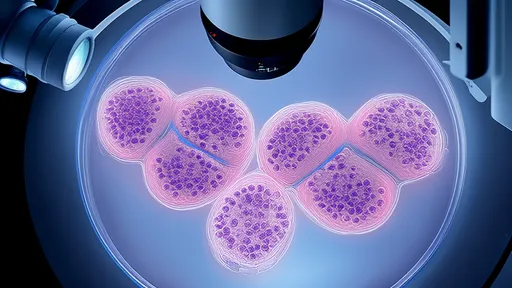
The study focused on dermal fibroblasts, the workhorse cells responsible for producing collagen and maintaining skin structure. As these cells age, they accumulate epigenetic "scars" – chemical modifications to DNA that progressively silence genes involved in tissue repair and regeneration. The research team developed a cocktail of small molecules capable of selectively removing these age-related epigenetic marks while preserving essential cellular functions.
Precision Epigenetic Editing Shows Remarkable Results
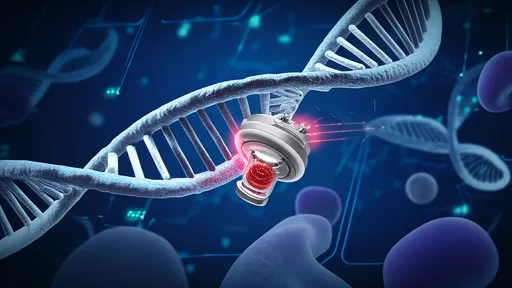
Unlike previous cellular reprogramming methods that relied on complete epigenetic resetting through Yamanaka factors (which carries cancer risks), this new technique employs targeted epigenetic erasers. These compounds specifically remove methyl groups from histones and DNA at key genomic locations associated with cellular aging. Treated fibroblasts showed dramatic improvements in migration capacity, collagen production, and response to oxidative stress – all hallmarks of younger cells.
Perhaps most strikingly, the rejuvenated fibroblasts exhibited gene expression profiles closely matching those of cells from donors 20-30 years younger. Metabolic activity normalized to youthful levels, and telomeres – the protective caps at chromosome ends – showed signs of elongation. The cells maintained their specialized identity throughout the process, avoiding the dedifferentiation pitfalls of earlier approaches.
Mechanistic Insights Reveal Surprising Plasticity
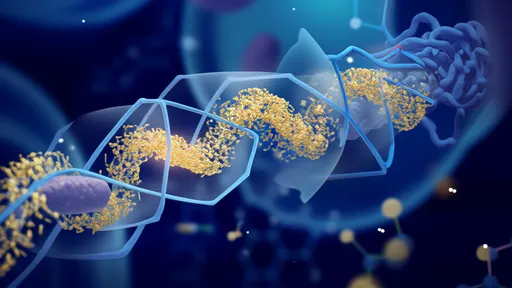
Deep sequencing analysis revealed that the treatment doesn't simply erase all epigenetic marks indiscriminately. Instead, it appears to reset specific regulatory regions controlling networks of age-related genes. The chromatin architecture of treated cells regains the more open configuration characteristic of young cells, particularly around genes involved in extracellular matrix production and stress response.
The researchers identified a critical window of intervention – applying the epigenetic erasers during a specific phase of the cell cycle yields optimal results. This timing coincides with natural chromatin remodeling processes, suggesting the treatment works synergistically with the cell's intrinsic repair mechanisms. The effects appear durable, with treated cells maintaining their rejuvenated state through multiple divisions.
Potential Applications Beyond Cosmetic Dermatology
While the immediate applications for skin aging are obvious, the implications extend far beyond cosmetic dermatology. Fibroblasts play crucial roles in wound healing, and aged individuals' slow healing rates contribute significantly to morbidity. Preliminary tests show the rejuvenated fibroblasts dramatically improve wound closure rates in aged skin equivalents.
The technology may eventually help treat fibrotic conditions where fibroblasts become stuck in pathological states. By resetting their epigenetic programming, it might be possible to "retrain" malfunctioning cells. Researchers caution that extensive safety testing remains before clinical applications, but the approach represents a paradigm shift in how we conceptualize cellular aging.
Ethical Considerations and Future Directions
As with any powerful biotechnology, this development raises important ethical questions. The potential to extend cellular lifespan could have profound implications for age-related diseases, but also risks exacerbating social inequalities if access becomes limited to wealthy individuals. The research team has emphasized their focus on therapeutic applications rather than life extension.
Future work will explore whether similar epigenetic resetting can rejuvenate other cell types, and whether the effects translate to whole tissues in living organisms. Early animal studies are underway, with particular interest in whether systemic delivery could address multiple age-related conditions simultaneously. The researchers are also developing more precise delivery methods to target specific tissues while avoiding off-target effects.
This breakthrough represents a significant milestone in the field of epigenetic therapeutics. By demonstrating that cellular aging markers can be selectively removed without genetic manipulation, it opens new avenues for treating age-related degeneration. As the technology matures, it may fundamentally change our approach to degenerative diseases and the very biology of aging itself.

By /Aug 18, 2025
By /Aug 18, 2025

By /Aug 18, 2025

By /Aug 18, 2025

By /Aug 18, 2025

By /Aug 18, 2025

By /Aug 18, 2025

By /Aug 18, 2025

By /Aug 18, 2025
By /Aug 18, 2025
By /Aug 18, 2025
By /Aug 18, 2025
By /Aug 18, 2025
By /Aug 18, 2025

By /Aug 18, 2025
By /Aug 18, 2025
By /Aug 18, 2025
By /Aug 18, 2025
By /Aug 18, 2025
By /Aug 18, 2025
