The agricultural landscape is undergoing a profound transformation, shifting from traditional practices to a data-driven paradigm known as smart farming. At the heart of this revolution lies the Internet of Things (IoT), a network of interconnected devices that is fundamentally reshaping how we manage and cultivate our farmlands. This is not a distant future concept; it is a present-day reality where sensors in the soil, drones in the air, and analytics in the cloud are working in concert to create a new era of precision and efficiency in agriculture.
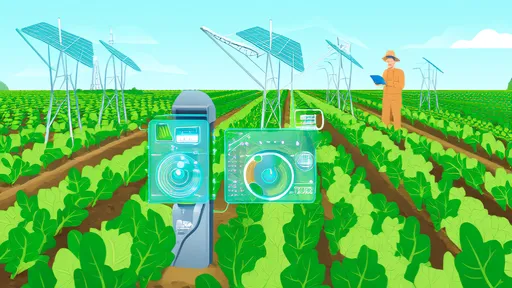
The core of IoT-enabled farm management is a vast and silent network of sensors deployed across fields. These unassuming devices are the diligent sentinels of the modern farm, constantly gathering critical data on a multitude of environmental factors. Soil moisture sensors probe beneath the surface, providing real-time readings that tell a farmer exactly when and where water is needed, moving irrigation from a scheduled guess to an on-demand resource. Nutrient sensors analyze the soil's composition, detecting deficiencies in nitrogen, potassium, and phosphorus, thereby enabling targeted fertilization that reduces waste and environmental runoff. Beyond the soil, microclimate stations monitor air temperature, humidity, solar radiation, and wind speed, painting a hyper-local picture of the conditions each plant experiences.
This constant stream of raw data is powerful but would be overwhelming without a means to process it. This is where connectivity and data analytics come into play. The data harvested by the sensors is wirelessly transmitted via networks like LoRaWAN, NB-IoT, or cellular networks to a central platform, often cloud-based. Here, sophisticated algorithms and machine learning models crunch the numbers, transforming millions of data points into actionable intelligence. These platforms can identify patterns, predict outcomes, and generate clear recommendations. A farmer no longer sees just a field; they see a dynamic data visualization—a map highlighting areas of stress, predicting yield potential, or flagging the early signs of pest infestation long before the human eye could possibly detect them.
One of the most impactful applications of this data is in the realm of precision resource management. Traditional blanket application of water, fertilizers, and pesticides is notoriously inefficient. IoT technology dismantles this one-size-fits-all approach. Using the precise data maps generated by the analytics platform, farmers can employ variable rate technology (VRT). Tractors and implements equipped with GPS and control systems can automatically adjust the application of inputs on the go. A sector of the field showing optimal nutrient levels receives less fertilizer, while a struggling area receives more. This precision conserves valuable resources, dramatically cuts input costs for the farmer, and significantly mitigates agriculture's environmental footprint by minimizing chemical leaching and runoff into waterways.
Furthermore, IoT extends its reach to crop health monitoring and protection. Drones, or unmanned aerial vehicles (UAVs), equipped with multispectral and thermal cameras, fly over fields capturing imagery that reveals far more than visible light. These cameras can detect subtle changes in plant health, identifying water stress, nutrient deficiencies, or disease outbreaks often weeks before symptoms become visible to the naked eye. This allows for early and targeted intervention, potentially saving entire crops from ruin. Similarly, automated traps with cameras and sensors can monitor for specific pests, counting and identifying them and alerting the farmer only when population thresholds are exceeded, enabling a more judicious and ecological approach to pest control.
The benefits of integrating IoT into farmland management are substantial and multi-faceted. The most immediate is the significant boost in operational efficiency. Automation of monitoring tasks saves countless labor hours, allowing farmers to manage larger areas more effectively. This efficiency directly translates into enhanced crop yields and improved quality, as plants receive optimal care tailored to their immediate needs. From an economic perspective, the savings on water, fuel, fertilizers, and pesticides directly improve the bottom line, making farms more profitable and sustainable businesses. Environmentally, the reduction in excess chemical use protects local ecosystems and conserves vital water resources, aligning agricultural production with broader conservation goals.
Despite its immense potential, the path to widespread IoT adoption in agriculture is not without its obstacles. The initial investment required for sensors, connectivity infrastructure, and software platforms can be prohibitive for smaller farms, creating a digital divide. The reliability of connectivity in often remote rural areas remains a persistent challenge. Furthermore, the influx of big data demands a new set of skills; farmers must become not just cultivators of the land but also managers of technology and interpreters of data, necessitating training and support. Concerns regarding data ownership, privacy, and cybersecurity also need to be addressed to build trust in these systems.
Looking ahead, the future of IoT in agriculture is incredibly promising. The integration of Artificial Intelligence and Machine Learning will push predictive analytics further, moving from describing current conditions to forecasting future events with startling accuracy. The expansion of 5G networks will provide the bandwidth and low latency needed for real-time control of even more autonomous machinery, from tractors to robotic harvesters. We are moving towards a reality of closed-loop systems where decisions are made and executed by machines with minimal human intervention, optimizing every single step of the agricultural cycle. The farm of the future will be an interconnected, intelligent, and sustainable ecosystem, and IoT is the foundational technology making it all possible.
In conclusion, the application of the Internet of Things in farmland management is far more than a technological upgrade; it is a fundamental reimagining of agriculture itself. By providing unprecedented visibility and control over the growing process, IoT empowers farmers to make smarter decisions, maximize productivity, and steward their land more responsibly. As the technology continues to evolve and become more accessible, it holds the key to addressing one of humanity's most pressing challenges: how to feed a growing global population in a sustainable and efficient manner. The seeds of this future have already been planted, and they are being nurtured by data.

By /Aug 25, 2025
By /Aug 25, 2025
By /Aug 25, 2025
By /Aug 25, 2025
By /Aug 25, 2025

By /Aug 25, 2025
By /Aug 25, 2025
By /Aug 25, 2025

By /Aug 25, 2025
By /Aug 25, 2025

By /Aug 25, 2025

By /Aug 25, 2025
By /Aug 25, 2025
By /Aug 25, 2025
By /Aug 25, 2025
By /Aug 25, 2025
By /Aug 25, 2025
By /Aug 25, 2025
By /Aug 25, 2025
By /Aug 25, 2025
